Enterobacteriaceae resistant to β-lactam include Escherichia coli and Klebsiella sp. Multiresistance to antibiotics in Enterobacteriaceae and in particular in Klebsiella sp is constantly evolving. Klebsiella is characterized by natural resistance to aminos and carboxypenicillins. Ceftazidime is a 3rd generation cephalosporin active on Gram-negative bacteria, strict aerobic or facultative anaerobic. Enterobacteriaceae resistance to β-lactam is more frequently mediated by the production of β-lactamases. The objective of this study was based on the resistance of Klebsiella sp to ceftazidime by the production of several enzymes at the Saint Camille Hospital in Ouagadougou. One hundred and sixty-two (162) strains of Enterobacteriaceae were collected at the Saint Camille Hospital in Ouagadougou, including 33 strains of Klebsiella sp and tested with antibiotics. The detection of resistance genes encoding Extended-spectrum beta-lactamases was performed at Laboratory of Molecular Biology and Genetics by conventional Polymerase Chain Reaction. The strains were mainly isolated from urine (29) and showed strong resistance to AMC penicillins (94.12%) and ceftazidime (72.72%). The Extended-spectrum β-lactamases phenotype was found in 42.85% of strains, which were positive by conventional PCR. The CTX-M genes (54,54%) followed by IMP (21.21%). Analysis of PCR products after agarose gel electrophoresis confirms the presence of resistance genes encoding the CTX-M and IMP genes. This study highlights the coexistence of resistance genes of bacterial strains encountered in the clinical environment, hence the need to set up and support an antibiotic resistance surveillance unit. The misuse or inappropriate use of antibiotics is mainly responsible for the emergence of antibiotic resistance. Our study confirmed the presence of the resistance genes CTX-M-type Extended spectrum β-lactamase gene, Guiana Extended-spectrum β-lactamase and IMP-type metallo-β-lactamase gene encoding the enzymes CTX-M, GES and IMP respectively in clinical strains of Klebsiella spp. isolated from the Saint Camille Hospital in Ouagadougou, Burkina Faso.
This is an Open Access article, distributed under the terms of the Creative Commons Attribution 4.0 International License (http://creativecommons.org/licenses/by/4.0/), which permits unrestricted use, distribution and reproduction in any medium or format, provided the original work is properly cited.
Bacteria have become resistant and embody a global public health threat
[1]
Courvalin P, Leclercq R. Antibiogramme. Ediyions Eska; 2006. 693 p.
[1]
. To combat this threat, the medical community has turned to antibiotics such as carbapenems as a first-aid treatment. Unfortunately, the misuse of these antibiotics has led to a more crucial problem, the emergence of carbapenem-resistant Enterobacteriaceae (CRE)
[2]
Boivin S, Caux C. Carbapenemase-producing Enterobacteriaceae. Vol. 13. 2016; 13.
[2]
. Klebsiella pneumoniae is a major cause of healthcare-associated infections and a cause of certain community-acquired infections, including severe bacterial infections
[3]
Di Pilato, Vincenzo, Simona Pollini, Vivi Miriagou, Gian Maria Rossolini, et Marco Maria D’Andrea. 2024. « Carbapenem-Resistant Klebsiella Pneumoniae: The Role of Plasmids in Emergence, Dissemination, and Evolution of a Major Clinical Challenge ». Expert Review of Anti-Infective Therapy 22(1‑3): 25‑43.
. Klebsiella pneumoniae is an opportunistic Gram-negative bacterium that often multidrug-resistant pathogen affects humans, causes severe infections worldwide, and is associated with a high mortality rate
[4]
Balandraud A. The Role of Clones in Antibiotic Resistance in Klebsiella pneumoniae. 2021. 156 p.
[4]
. Enterobacteriaceae resistant to β-lactam include Escherichia coli and Klebsiella sp.
[5]
Barrio M. Antibiotic Resistance: How Bacteria Become Resistant. UP’ Magazine. January 10, 2024 (cited Jan. 15 2025). Available at:
. Multidrug resistance in enterobacteriaceae and in particular in Klebsiella spp is constantly evolving
[6]
Ben Haj Khalifa A, Khedher M. Epidemiology of uropathogenic Klebsiella spp. strains producing extended-spectrum β-lactamases in a Tunisian university hospital, 2009. Pathology Biology. Apr. 1, 2012; 60(2): e1–5.
. Klebsiella is characterized by natural resistance to aminos and carboxypenicillins
[7]
Hygis N. Hygiène hospitalière [Hospital hygiene]. Presses Universitaires Lyon; 1998. 678 p.
[7]
. Ceftazidime is a 3rd generation cephalosporin active on strict aerobic or facultative anaerobic Gram-negative bacteria
[8]
Allouch P, Pangon B, Marcolin M, Sire O. A Study of the Susceptibility of Gram-Negative Bacilli Collected from Various French Hospitals to Ceftazidime. Medicine and Infectious Diseases. Nov. 1, 1991; 21(11): 700–6.
. Enterobacteriaceae resistance to β-lactam is more frequently mediated by the production of β-lactamases. These resistance enzymes include extended-spectrum β-lactamases (ESBLs) of the CTX-M and GES types as well as IMP-type carbapenemases. The different mechanisms of resistance are encoded by these genes: decreased cell wall permeability, enzymatic inactivation and beta-lactamase production. Over the past two decades, an increase in the rate of resistance to certain antibiotics, including 3rd generation C3G cephalosporins and carbapenems, has been observed
[4]
Balandraud A. The Role of Clones in Antibiotic Resistance in Klebsiella pneumoniae. 2021. 156 p.
[4]
. Klebsiella pneumoniae isolates have been identified by the World Health Organization (WHO) as a “critical concern”
[9]
Ca-Sfm/eucast 2024. [cited Sept. 3, 2024]. Available at:
. It is in this case that this study is based on the resistance of Klebsiella sp to ceftazidime by the production of several enzymes at the Saint Camille Hospital in Ouagadougou (HOSCO).
2. Materials and Methods
In the present study, the Saint Camille Hospital of Ouagadougou (HOSCO) served as the site for the collection of bacterial samples while molecular analyses were carried out at the Laboratory of Molecular Biology and Genetics (LABIOGENE). The isolates were included based on the following criteria after the hospital received samples—which could be pus, stool, urine, etc. A phase of bacterial identification and isolation was conducted before proceeding with data collection. The selection of these genes stems from the fact that antibiotic resistance is a major public health issue and a very serious concern, as it can sometimes lead to death because bacteria have developed resistance that prevents medications from being effective.
2.1. Bacterial Analyses
The study looked at Gram-negative strains of bacilli. These bacterial strains were isolated and identified from different types of biological samples, including urine, stool, pus, blood and vaginal swabs, at the Saint Camille Hospital in Ouagadougou.
After isolation and identification, the bacterial strains were stored with LABIOGENE at 4°C in a Luria-Bertani (LB) medium supplemented with 30% glycerol.
2.1.1. Collection
The collection of bacterial strains was carried out after confirmation of their isolation and identification. Pure colonies cultured on Mueller-Hinton (MH) agar at the collection site were taken to LABIOGENE and then incubated in the oven for 24 hours to verify their viability and purity.
A total of 162 bacterial strains were collected, including 33 strains belonging to the genus Klebsiella spp. A macroscopic reading of the colonies was carried out after 24 hours of incubation. An antibiogram was then performed for each bacterial strain according to the recommendations of the Antibiogram Committee of the French Society of Microbiology
[10]
Abbas, Rim, Mohamed Chakkour, Hiba Zein El Dine, Eseiwi Folorunsho Obaseki, Soumaya T. Obeid, Aya Jezzini, Ghassan Ghssein, et Zeinab Ezzeddine. 2024. « General Overview of Klebsiella Pneumonia: Epidemiology and the Role of Siderophores in Its Pathogenicity ». Biology 13(2): 78.
All isolates were tested for susceptibility to 6 different antibiotics by the Mueller Hinton II agar delivery method (Oxoid, England) in accordance with the recommendations of the Antibiogram Committee of the French Society of Microbiology
[10]
Abbas, Rim, Mohamed Chakkour, Hiba Zein El Dine, Eseiwi Folorunsho Obaseki, Soumaya T. Obeid, Aya Jezzini, Ghassan Ghssein, et Zeinab Ezzeddine. 2024. « General Overview of Klebsiella Pneumonia: Epidemiology and the Role of Siderophores in Its Pathogenicity ». Biology 13(2): 78.
. The results were interpreted according to CASFM/EUCAST criteria and the strains were classified into three categories: susceptible (S), high-dose susceptible (SFP) and resistant (R). The antimicrobial discs (Oxoid) used were ceftriaxone (30 μg), ceftazidime (30 μg), cefotaxime (30 μg), imipenem (10 μg), amoxicillin + clavulanic acid (30 μg) and aztreonam (30 μg).
2.2. Molecular Analyses
2.2.1. DNA Extraction
The DNA extraction was done by the method described by Metuor et al., in 2019
[11]
Mètuor DA, Tiemtore RYWK, Bangre YA, Zohoncon TM, Sougue S, Zongo JK, Simpore J. Detection of multidrug-resistant enterobacteria simultaneously producing extended-spectrum -lactamases of the PER and GES types isolated at Saint Camille Hospital Center, Ouagadougou, Burkina Faso. Afr J Microbiol Res. 31 août 2019; 13(26): 414‑20.
. DNA concentration and purity were assessed using a NanoDrop spectrophotometer. A portion of the supernatant was used immediately for amplification reactions, while the remainder was retained at −80°C for subsequent analyses.
2.2.2. Polymerase Chain Reaction or PCR
The DNA extracted from the resistant strains was analyzed by conventional PCR to look for the CTX-M, GES and IMP genes using primer pairs specific (Table 2) to these resistance genes. PCR amplification reactions were performed using the GeneAmp PCR System 9700 thermal cycler (Applied Biosystems, California, USA) in a 20 μL reaction mixture. This reaction mixture consisted of 4 μL of the 5X Firepol® Master Mix + 0.5 μL of sense primer + 0.5 μL of antisense primer + 14 μL of PCR water + 1 μL of bacterial DNA from each strain. The PCR program used is given in Table 1 and the primer sequences in Table 2.
Table 1. PCR Program by Gene Type.
Genes Settings
Condition / duration
blaIMP
blaGES
blaCTX-M
Initial denaturation
96°C / 5 mn
96°C / 7 mn
96°C / 5 mn
Denaturation
96°C / 30s
96°C / 1mn
96°C / 1mn
Hybridization
54°C / 30s
60°C / 1mn
50°C / 1mns
Elongation
72°C / 30s
72°C / 1mn
72°C / 1mn
Final elongation
72°C / 7 mn
72°C /10 mn
72°C /10 mn
Number of cycles
30
35
35
Legend
This table shows the polymerization chain reaction steps for our genes with initial denaturation first followed by denaturation, hybridization, elongation and finally final elongation.
Table 2. Nucleotide sequences of the different primers.
Genes of interest
Sequences (5'-3')
Size (pb)
References
blaCTX-M
For: 5’GTTACAATGTGTGAGAAGCAG 3’
1000
[12]
Pagani L, Dell’Amico E, Migliavacca R, D’Andrea MM, Giacobone E, Amicosante G, Romero E, Rossolini GM. Multiple CTX-M-Type Extended-Spectrum β-Lactamases in Nosocomial Isolates of Enterobacteriaceae from a Hospital in Northern Italy. J Clin Microbiol. sept 2003; 41(9): 4264‑9.
Moubareck C, Bremont S, Conroy MC, Courvalin P, Lambert T. GES-11, a Novel Integron-Associated GES Variant in < em> Acinetobacter baumannii</em> Antimicrobial Agents and Chemotherapy. 1 août 2009; 53(8): 3579 LP ‑ 3581.
[13]
Rev: 5’ CTATTTGTCCGTGCTCAGG 3’
blaIMP
For: 5’ CATGGTTTGGTGCTTGT 3’
500
[14]
Huang S, Dai W, Sun S, Zhang X, Zhang L. Prevalence of Plasmid-Mediated Quinolone Resistance and Aminoglycoside Resistance Determinants among Carbapeneme Non-Susceptible Enterobacter cloacae. Bereswill S, directeur scientifique. PLoS ONE. 23 oct 2012; 7(10): e47636.
On the other hand, this table shows the different primers used for our genes of interest
2.2.3. Agarose Gel Electrophoresis
The PCR-amplified DNA fragments were separated by agarose gel electrophoresis (1.5%) prepared in a 1X EDTA 1X tri-base - borate solution containing 8 μL of ethidium bromide. The 1000 bp molecular weight marker was used to assess the expected sizes of the strips. The migration was carried out for 30 minutes under a voltage of 110 V with an intensity of 65 mA. The resulting migration products were viewed under UV light with the transilluminator (Vilber E-Box) and the photos were recorded.
2.2.4. Statistical Analyses
The data collected was entered into Excel 2021. Antibiotic resistance rates were calculated according to the formula P= 100n/ N (with n the number of antibiotic-resistant strains and N the total number of strains studied). The same formula was used to calculate the prevalence of each gene as well as the prevalences of gene coexistence (with n the number of strains carrying the gene and N the total number of strains carrying resistance genes).
3. Results and Discussion
3.1. Bacterial Strains
Among the 162 Gram-negative resistant bacterial strains, we identified 33 species of the genus Klebsiella spp. These bacterial species of the genus Klebsiella were resistant to at least one of the antibiotics tested, which are: 3rd generation cephalosporins (ceftriaxone (CRO), ceftazidime (CAZ), cefotaxime (CTX)), imipenem carbapenem (IMP), amoxicillin + clavulanic acid (AMC) and aztreonam (ATM).
These strains were isolated from various biological samples such as urine (n = 30) and pus (n = 3).
3.2. Resistance Profile
The isolated bacterial strains showed high resistance to amoxicillin + clavulanic acid (94.12%), cefotaxime (45.45%). Imipenem (IMI) is the only carbapenem used in this study. Of the 33 strains tested, 44.13% were resistant to this antibiotic. Our strains had the same resistance rate (44.13%) to cefotaxime and imipenem.
3.3. Molecular Characterization of Genes Coding for ESBL Production
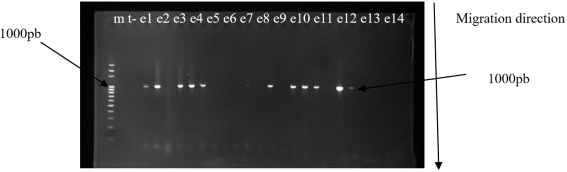
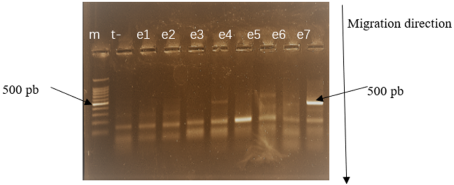
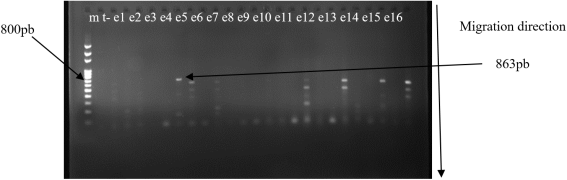
Among the isolates from the 33 strains out of 162, a rate of 20.37% was observed. Analysis of the PCR products by agarose gel electrophoresis revealed that 24 isolates carried at least one of the genes being sought and that two (2) isolates harbored both the CTX-M and IMP genes. Of the 33 isolated strains, 18 carried the blaCTX-M gene, with amplicons of 1,000 bp (Figure 1); 7 strains tested positive for the blaIMP gene, detected at 500 bp (Figure 2); and 1 strain carried the blaGES gene (Figure 3). The Extended-spectrum β-lactamases phenotype was found in 72.72% of strains, which were positive by conventional PCR.
Figure 2. Electrophoretic profile of the amplicons of the blaIMP gene at 500 bp.
blaIMP: Gene enconding Imipenemase
m: Molecular weight marker (100bp DNA scale),
t-: Negative control, e1 – e8 represent the samples: e1 = urine; e2 = urine; e3 = urine; e4 = pus; e5 = urine; e6 = pus e7 = urine e8 = pus. The migration direction of electrophoresis is from top to bottom.
The numbers e1 to e16 represent the samples: e1 = stool; e2 = stool; e3 = urine; e4 = urine; e5 = pus; e6 = urine, e7: stool, e8: pus, e9: pus, e10: urine, e11: urine, e12: stool, e13: stool, e14: urine, e15: pus, e16: urine. The direction of migration of electrophoresis is from top to bottom.
4. Discussion
Since their first description in the 1980s, especially after their detection in 1983, extended-spectrum β-lactamase-prs oducing Enterobacteriaceae (ESBL) have experienced a rapid global expansion, with variations in prevalence depending on geographical and hospital settings,
[15]
Bermudes-Lavalle H. Extended-spectrum beta-lactamases: molecular characterization and epidemiology. sn; 1996. 132 p.
[15]
. Recent data confirm that these bacteria are widely involved in nosocomial and community-acquired infections, with a worrying increase in multidrug resistance, especially in resource-limited countries,
[16]
Rodríguez-Baño J, Gutierrez-Gutierrez B, Machuca I, Pascual A. Treatment of Infections Caused by Extended-Spectrum-Beta-Lactamase-, AmpC-, and Carbapenemase-Producing Enterobacteriaceae. Clinical Microbiology Reviews. Feb. 14, 2018; 31(2):
The results of this study confirm the major role of bacteria of the genus Klebsiella spp. in resistant Gram-negative infections. The proportion observed (33 isolates out of 162 strains, or 20.37%) underlines their significant contribution, in line with data from the literature that identify Klebsiella pneumoniae as a major pathogen involved in urinary, respiratory and suppurative infections, particularly in hospital settings;
[17]
Podschun R, Ullmann U. Klebsiella spp. as Nosocomial Pathogens: Epidemiology, Taxonomy, Typing Methods, and Pathogenicity Factors. Clinical Microbiology Reviews. oct 1998; 11(4): 589‑603.
Pitout JD, Laupland KB. Extended-spectrum β-lactamase-producing Enterobacteriaceae: an emerging public-health concern. The Lancet Infectious Diseases. 1 mars 2008; 8(3): 159‑66.
Centers for Disease Control and Prevention, 2023. Antibiotic resistance threats in the United States, 2019 | CiNii Research. [cited Apr. 20, 2026]. Available at:
The observed antibiotic resistance profile is of particular concern. The very high resistance to the amoxicillin/clavulanic acid combination (94.12%) can be explained not only by the production of ESBLs, but also by other mechanisms such as the hyperproduction of penicillinases, the modification of porins or the activation of efflux systems,
[21]
Livermore DM. beta-Lactamases in laboratory and clinical resistance. Clin Microbiol Rev. oct 1995; 8(4): 557‑84.
. Similar rates have been reported in several studies in sub-Saharan Africa, reflecting frequent and often inappropriate use of this antibiotic combination,
[23]
Tansarli GS, Poulikakos P, Kapaskelis A, Falagas ME. Proportion of extended-spectrum β-lactamase (ESBL)-producing isolates among Enterobacteriaceae in Africa: evaluation of the evidence—systematic review. J Antimicrob Chemother. 1 mai 2014; 69(5): 1177‑84.
. Resistance to cefotaxime (45.45%), a third-generation cephalosporin (C3G), is strongly indicative of ESBL production. This observation is consistent with the global spread of CTX-M enzyme-producing Enterobacteriaceae, which have become the dominant ESBLs at the expense of TEM and HVS types
[16]
Rodríguez-Baño J, Gutierrez-Gutierrez B, Machuca I, Pascual A. Treatment of Infections Caused by Extended-Spectrum-Beta-Lactamase-, AmpC-, and Carbapenemase-Producing Enterobacteriaceae. Clinical Microbiology Reviews. Feb. 14, 2018; 31(2):
Bedenić, Branka, et Tomislav Meštrović. 2021. « Mechanisms of Resistance in Gram-Negative Urinary Pathogens: From Country-Specific Molecular Insights to Global Clinical Relevance ». Diagnostics 11(5): 800.
Bevan ER, Jones AM, Hawkey PM. Global epidemiology of CTX-M β-lactamases: temporal and geographical shifts in genotype. J Antimicrob Chemother. 1 août 2017; 72(8): 2145‑55.
. The selection pressure exerted by the intensive use of C3G in the treatment of Gram-negative infections is a key factor promoting the emergence and spread of these resistances.
A particularly alarming result of this study is the high rate of imipenem resistance (44.13%). As carbapenems are considered antibiotics of last resort, such a level of resistance strongly suggests the presence of carbapenes. The detection of the blaIMPgene in 21.2% of isolates confirms this hypothesis and indicates the circulation of metallo-β-lactamases capable of hydrolyzing carbapenems
[28]
Nordmann P, Poirel L, Walsh TR, Livermore DM. The emerging NDM carbapenemases. Trends in Microbiology. Dec. 2011; 19(12): 588‑95.
. This rate is higher than those reported in some previous African studies, but is part of a recent trend of increasing resistance to carbapenems in resource-limited countries
[29]
Manenzhe RI, Zar HJ, Nicol MP, Kaba M. The spread of carbapenemase-producing bacteria in Africa: a systematic review. J Antimicrob Chemother. 1 janv 2015; 70(1): 23‑40.
Molecular analysis reinforces these observations. The predominance of the blaCTX-M gene (54.5%) confirms its central role in β-lactam resistance, in line with global epidemiological trends where these enzymes largely dominate among ESBLs
[26]
Bedenić, Branka, et Tomislav Meštrović. 2021. « Mechanisms of Resistance in Gram-Negative Urinary Pathogens: From Country-Specific Molecular Insights to Global Clinical Relevance ». Diagnostics 11(5): 800.
Bevan ER, Jones AM, Hawkey PM. Global epidemiology of CTX-M β-lactamases: temporal and geographical shifts in genotype. J Antimicrob Chemother. 1 août 2017; 72(8): 2145‑55.
. The presence of the blaIMPgene in a significant proportion of isolates, as well as the detection of the blaGES gene (3.03%), testifies to the diversity of resistance mechanisms circulating in the study population.
Of particular concern is the simultaneous detection of the blaCTX-M and blaIMPgenes in some isolates. This phenomenon reflects the coexistence of several resistance mechanisms within the same strain, favored by the presence of mobile genetic elements such as plasmids, facilitating their horizontal dissemination,
[30]
Anne Marie Queenan, K Bush, 2007. Carbapenemases: the Versatile β-Lactamases | Clinical Microbiology Reviews. [cited Apr. 20, 2026]. Disponible sur:
. This results in an increase in the level of multidrug resistance and a drastic reduction in the therapeutic options available.
In addition, resistance to carbapenems may also be related to complementary mechanisms such as decreased membrane permeability (porin alteration) or activation of efflux pumps, often in association with β-lactamase production
[31]
Brement G. The Emergence of Extended-Spectrum Beta-Lactamases (ESBLs) in the Community: Impact on Patient Care. 2009. 192 p.
[31]
. The emergence and spread of these resistances are strongly influenced by several factors, including the excessive and inappropriate use of antibiotics, inadequate hygienic conditions, weak infection control systems and the mobility of populations, facilitating the spread of resistant strains locally and internationally.
5. Conclusion
The misuse or inappropriate use of antibiotics is mainly responsible for the emergence of antibiotic resistance. The spread of resistant strains producing extended-spectrum β-lactamases poses a threat to public health by frustrating the treatment of serious infections. This public health problem requires careful monitoring and implementation of a policy on antibiotic use both in the community and in hospitals. Public education, banning the sale of antibiotics without a prescription, and reducing probabilistic antibiotic therapy in inpatient wards could be solutions to limit antibiotic resistance. The fight against this phenomenon does not necessarily involve the discovery of new antibacterial agents, but rather strict compliance with simple hospital hygiene measures and the more rational use of antibiotics.
Our study confirmed the presence of the resistance genes blaCTX-M, blaGESand blaIMPencoding the enzymes CTX-M, GES and IMP respectively in clinical strains of Klebsiella spp. isolated from the Saint Camille Hospital in Ouagadougou, Burkina Faso.
Antibiogram Committe of the French Society of Microbiology
CAZ
Ceftazidime
CRE
Carbapenem-resistant Enterobacteriaceae
CTR
Ceftriaxone
CTX
Cefotaxime
DNA
Deoxyribonucleic Acid
ESBL
Extended-spectrum β-lactamase
HOSCO
Saint Camille Hospital in Ouagadougou
IMI
Imipenem
LABIOGENE
Laboratory of Molecular Biology And Genetics
LB
Luria Bertani
MH
Mueller-Hinton
PCR
Polymerase Chain Reaction
R
Resistant
S
Sensible
SFP
Sensitive at High Dosage
UV
Ultra-violet
Acknowledgments
We would like to thank all the staff of the Saint Camille Hospital in Ouagadougou (HOSCO) and the Laboratory of Molecular Biology and Molecular Genetics (LABIOGENE) who actively participated in the realization of this work.
Author Contributions
Pegdwende Rose Bonkoungou: Conceptualization, Data curation, Formal analysis, Funding acquisition, Investigation, Methodology, Resources, Software, Supervision, Validation, Visualization, Writing – original draft, Writing – review & editing
Courvalin P, Leclercq R. Antibiogramme. Ediyions Eska; 2006. 693 p.
[2]
Boivin S, Caux C. Carbapenemase-producing Enterobacteriaceae. Vol. 13. 2016; 13.
[3]
Di Pilato, Vincenzo, Simona Pollini, Vivi Miriagou, Gian Maria Rossolini, et Marco Maria D’Andrea. 2024. « Carbapenem-Resistant Klebsiella Pneumoniae: The Role of Plasmids in Emergence, Dissemination, and Evolution of a Major Clinical Challenge ». Expert Review of Anti-Infective Therapy 22(1‑3): 25‑43.
Ben Haj Khalifa A, Khedher M. Epidemiology of uropathogenic Klebsiella spp. strains producing extended-spectrum β-lactamases in a Tunisian university hospital, 2009. Pathology Biology. Apr. 1, 2012; 60(2): e1–5.
Hygis N. Hygiène hospitalière [Hospital hygiene]. Presses Universitaires Lyon; 1998. 678 p.
[8]
Allouch P, Pangon B, Marcolin M, Sire O. A Study of the Susceptibility of Gram-Negative Bacilli Collected from Various French Hospitals to Ceftazidime. Medicine and Infectious Diseases. Nov. 1, 1991; 21(11): 700–6.
Abbas, Rim, Mohamed Chakkour, Hiba Zein El Dine, Eseiwi Folorunsho Obaseki, Soumaya T. Obeid, Aya Jezzini, Ghassan Ghssein, et Zeinab Ezzeddine. 2024. « General Overview of Klebsiella Pneumonia: Epidemiology and the Role of Siderophores in Its Pathogenicity ». Biology 13(2): 78.
Mètuor DA, Tiemtore RYWK, Bangre YA, Zohoncon TM, Sougue S, Zongo JK, Simpore J. Detection of multidrug-resistant enterobacteria simultaneously producing extended-spectrum -lactamases of the PER and GES types isolated at Saint Camille Hospital Center, Ouagadougou, Burkina Faso. Afr J Microbiol Res. 31 août 2019; 13(26): 414‑20.
Pagani L, Dell’Amico E, Migliavacca R, D’Andrea MM, Giacobone E, Amicosante G, Romero E, Rossolini GM. Multiple CTX-M-Type Extended-Spectrum β-Lactamases in Nosocomial Isolates of Enterobacteriaceae from a Hospital in Northern Italy. J Clin Microbiol. sept 2003; 41(9): 4264‑9.
Moubareck C, Bremont S, Conroy MC, Courvalin P, Lambert T. GES-11, a Novel Integron-Associated GES Variant in < em> Acinetobacter baumannii</em> Antimicrobial Agents and Chemotherapy. 1 août 2009; 53(8): 3579 LP ‑ 3581.
[14]
Huang S, Dai W, Sun S, Zhang X, Zhang L. Prevalence of Plasmid-Mediated Quinolone Resistance and Aminoglycoside Resistance Determinants among Carbapeneme Non-Susceptible Enterobacter cloacae. Bereswill S, directeur scientifique. PLoS ONE. 23 oct 2012; 7(10): e47636.
Bermudes-Lavalle H. Extended-spectrum beta-lactamases: molecular characterization and epidemiology. sn; 1996. 132 p.
[16]
Rodríguez-Baño J, Gutierrez-Gutierrez B, Machuca I, Pascual A. Treatment of Infections Caused by Extended-Spectrum-Beta-Lactamase-, AmpC-, and Carbapenemase-Producing Enterobacteriaceae. Clinical Microbiology Reviews. Feb. 14, 2018; 31(2):
Pitout JD, Laupland KB. Extended-spectrum β-lactamase-producing Enterobacteriaceae: an emerging public-health concern. The Lancet Infectious Diseases. 1 mars 2008; 8(3): 159‑66.
Centers for Disease Control and Prevention, 2023. Antibiotic resistance threats in the United States, 2019 | CiNii Research. [cited Apr. 20, 2026]. Available at:
Tansarli GS, Poulikakos P, Kapaskelis A, Falagas ME. Proportion of extended-spectrum β-lactamase (ESBL)-producing isolates among Enterobacteriaceae in Africa: evaluation of the evidence—systematic review. J Antimicrob Chemother. 1 mai 2014; 69(5): 1177‑84.
Bedenić, Branka, et Tomislav Meštrović. 2021. « Mechanisms of Resistance in Gram-Negative Urinary Pathogens: From Country-Specific Molecular Insights to Global Clinical Relevance ». Diagnostics 11(5): 800.
Bevan ER, Jones AM, Hawkey PM. Global epidemiology of CTX-M β-lactamases: temporal and geographical shifts in genotype. J Antimicrob Chemother. 1 août 2017; 72(8): 2145‑55.
Bonkoungou, P. R., Zongo, S. V., Bouniounou, D. P., Dabire, A. M., Zohoncon, M. T. (2026). Resistance of Klebsiella Sp to Ceftazidime Associated with the Production of β-lactamase Enzymes at the Saint Camille Hospital in Ouagadougou (Hosco). American Journal of Biomedical and Life Sciences, 14(4), 90-97. https://doi.org/10.11648/j.ajbls.20261404.14
Bonkoungou, P. R.; Zongo, S. V.; Bouniounou, D. P.; Dabire, A. M.; Zohoncon, M. T. Resistance of Klebsiella Sp to Ceftazidime Associated with the Production of β-lactamase Enzymes at the Saint Camille Hospital in Ouagadougou (Hosco). Am. J. Biomed. Life Sci.2026, 14(4), 90-97. doi: 10.11648/j.ajbls.20261404.14
Bonkoungou PR, Zongo SV, Bouniounou DP, Dabire AM, Zohoncon MT. Resistance of Klebsiella Sp to Ceftazidime Associated with the Production of β-lactamase Enzymes at the Saint Camille Hospital in Ouagadougou (Hosco). Am J Biomed Life Sci. 2026;14(4):90-97. doi: 10.11648/j.ajbls.20261404.14
@article{10.11648/j.ajbls.20261404.14,
  author = {Pegdwende Rose Bonkoungou and Sidnooma Veronique Zongo and Damis Patrik Bouniounou and Amana Metuor Dabire and Mahoukede Theodora Zohoncon},
  title = {Resistance of Klebsiella Sp to Ceftazidime Associated with the Production of β-lactamase Enzymes at the Saint Camille Hospital in Ouagadougou (Hosco)},
  journal = {American Journal of Biomedical and Life Sciences},
  volume = {14},
  number = {4},
  pages = {90-97},
  doi = {10.11648/j.ajbls.20261404.14},
  url = {https://doi.org/10.11648/j.ajbls.20261404.14},
  eprint = {https://article.sciencepublishinggroup.com/pdf/10.11648.j.ajbls.20261404.14},
  abstract = {Enterobacteriaceae resistant to β-lactam include Escherichia coli and Klebsiella sp. Multiresistance to antibiotics in Enterobacteriaceae and in particular in Klebsiella sp is constantly evolving. Klebsiella is characterized by natural resistance to aminos and carboxypenicillins. Ceftazidime is a 3rd generation cephalosporin active on Gram-negative bacteria, strict aerobic or facultative anaerobic. Enterobacteriaceae resistance to β-lactam is more frequently mediated by the production of β-lactamases. The objective of this study was based on the resistance of Klebsiella sp to ceftazidime by the production of several enzymes at the Saint Camille Hospital in Ouagadougou. One hundred and sixty-two (162) strains of Enterobacteriaceae were collected at the Saint Camille Hospital in Ouagadougou, including 33 strains of Klebsiella sp and tested with antibiotics. The detection of resistance genes encoding Extended-spectrum beta-lactamases was performed at Laboratory of Molecular Biology and Genetics by conventional Polymerase Chain Reaction. The strains were mainly isolated from urine (29) and showed strong resistance to AMC penicillins (94.12%) and ceftazidime (72.72%). The Extended-spectrum β-lactamases phenotype was found in 42.85% of strains, which were positive by conventional PCR. The CTX-M genes (54,54%) followed by IMP (21.21%). Analysis of PCR products after agarose gel electrophoresis confirms the presence of resistance genes encoding the CTX-M and IMP genes. This study highlights the coexistence of resistance genes of bacterial strains encountered in the clinical environment, hence the need to set up and support an antibiotic resistance surveillance unit. The misuse or inappropriate use of antibiotics is mainly responsible for the emergence of antibiotic resistance. Our study confirmed the presence of the resistance genes CTX-M-type Extended spectrum β-lactamase gene, Guiana Extended-spectrum β-lactamase and IMP-type metallo-β-lactamase gene encoding the enzymes CTX-M, GES and IMP respectively in clinical strains of Klebsiella spp. isolated from the Saint Camille Hospital in Ouagadougou, Burkina Faso.},
 year = {2026}
}
TY  - JOUR
T1  - Resistance of Klebsiella Sp to Ceftazidime Associated with the Production of β-lactamase Enzymes at the Saint Camille Hospital in Ouagadougou (Hosco)
AU  - Pegdwende Rose Bonkoungou
AU  - Sidnooma Veronique Zongo
AU  - Damis Patrik Bouniounou
AU  - Amana Metuor Dabire
AU  - Mahoukede Theodora Zohoncon
Y1  - 2026/08/22
PY  - 2026
N1  - https://doi.org/10.11648/j.ajbls.20261404.14
DO  - 10.11648/j.ajbls.20261404.14
T2  - American Journal of Biomedical and Life Sciences
JF  - American Journal of Biomedical and Life Sciences
JO  - American Journal of Biomedical and Life Sciences
SP  - 90
EP  - 97
PB  - Science Publishing Group
SN  - 2330-880X
UR  - https://doi.org/10.11648/j.ajbls.20261404.14
AB  - Enterobacteriaceae resistant to β-lactam include Escherichia coli and Klebsiella sp. Multiresistance to antibiotics in Enterobacteriaceae and in particular in Klebsiella sp is constantly evolving. Klebsiella is characterized by natural resistance to aminos and carboxypenicillins. Ceftazidime is a 3rd generation cephalosporin active on Gram-negative bacteria, strict aerobic or facultative anaerobic. Enterobacteriaceae resistance to β-lactam is more frequently mediated by the production of β-lactamases. The objective of this study was based on the resistance of Klebsiella sp to ceftazidime by the production of several enzymes at the Saint Camille Hospital in Ouagadougou. One hundred and sixty-two (162) strains of Enterobacteriaceae were collected at the Saint Camille Hospital in Ouagadougou, including 33 strains of Klebsiella sp and tested with antibiotics. The detection of resistance genes encoding Extended-spectrum beta-lactamases was performed at Laboratory of Molecular Biology and Genetics by conventional Polymerase Chain Reaction. The strains were mainly isolated from urine (29) and showed strong resistance to AMC penicillins (94.12%) and ceftazidime (72.72%). The Extended-spectrum β-lactamases phenotype was found in 42.85% of strains, which were positive by conventional PCR. The CTX-M genes (54,54%) followed by IMP (21.21%). Analysis of PCR products after agarose gel electrophoresis confirms the presence of resistance genes encoding the CTX-M and IMP genes. This study highlights the coexistence of resistance genes of bacterial strains encountered in the clinical environment, hence the need to set up and support an antibiotic resistance surveillance unit. The misuse or inappropriate use of antibiotics is mainly responsible for the emergence of antibiotic resistance. Our study confirmed the presence of the resistance genes CTX-M-type Extended spectrum β-lactamase gene, Guiana Extended-spectrum β-lactamase and IMP-type metallo-β-lactamase gene encoding the enzymes CTX-M, GES and IMP respectively in clinical strains of Klebsiella spp. isolated from the Saint Camille Hospital in Ouagadougou, Burkina Faso.
VL  - 14
IS  - 4
ER  -
Faculty of Life and Earth Science, Joseph KI-ZERBO University, Ouagadougou, Burkina Faso
Damis Patrik Bouniounou
Faculty of Life and Earth Science, Joseph KI-ZERBO University, Ouagadougou, Burkina Faso
Amana Metuor Dabire
Faculty of Life and Earth Science, Joseph KI-ZERBO University, Ouagadougou, Burkina Faso;Departmentof Microbiology-Molecular Biology, Pietro Annigoni Biomolecular Research Center (CERBA), Ouagadougou, Burkina Faso;Training and Research Unit in Applied Sciences and Technologies, Daniel Ouezzin Coulibaly University, Dedougou, Burkina Faso
Mahoukede Theodora Zohoncon
Faculty of Life and Earth Science, Joseph KI-ZERBO University, Ouagadougou, Burkina Faso;Faculty of Medicine, Saint Thomas Aquinas University, Ouagadougou, Burkina Faso
Bonkoungou, P. R., Zongo, S. V., Bouniounou, D. P., Dabire, A. M., Zohoncon, M. T. (2026). Resistance of Klebsiella Sp to Ceftazidime Associated with the Production of β-lactamase Enzymes at the Saint Camille Hospital in Ouagadougou (Hosco). American Journal of Biomedical and Life Sciences, 14(4), 90-97. https://doi.org/10.11648/j.ajbls.20261404.14
Bonkoungou, P. R.; Zongo, S. V.; Bouniounou, D. P.; Dabire, A. M.; Zohoncon, M. T. Resistance of Klebsiella Sp to Ceftazidime Associated with the Production of β-lactamase Enzymes at the Saint Camille Hospital in Ouagadougou (Hosco). Am. J. Biomed. Life Sci.2026, 14(4), 90-97. doi: 10.11648/j.ajbls.20261404.14
Bonkoungou PR, Zongo SV, Bouniounou DP, Dabire AM, Zohoncon MT. Resistance of Klebsiella Sp to Ceftazidime Associated with the Production of β-lactamase Enzymes at the Saint Camille Hospital in Ouagadougou (Hosco). Am J Biomed Life Sci. 2026;14(4):90-97. doi: 10.11648/j.ajbls.20261404.14
@article{10.11648/j.ajbls.20261404.14,
  author = {Pegdwende Rose Bonkoungou and Sidnooma Veronique Zongo and Damis Patrik Bouniounou and Amana Metuor Dabire and Mahoukede Theodora Zohoncon},
  title = {Resistance of Klebsiella Sp to Ceftazidime Associated with the Production of β-lactamase Enzymes at the Saint Camille Hospital in Ouagadougou (Hosco)},
  journal = {American Journal of Biomedical and Life Sciences},
  volume = {14},
  number = {4},
  pages = {90-97},
  doi = {10.11648/j.ajbls.20261404.14},
  url = {https://doi.org/10.11648/j.ajbls.20261404.14},
  eprint = {https://article.sciencepublishinggroup.com/pdf/10.11648.j.ajbls.20261404.14},
  abstract = {Enterobacteriaceae resistant to β-lactam include Escherichia coli and Klebsiella sp. Multiresistance to antibiotics in Enterobacteriaceae and in particular in Klebsiella sp is constantly evolving. Klebsiella is characterized by natural resistance to aminos and carboxypenicillins. Ceftazidime is a 3rd generation cephalosporin active on Gram-negative bacteria, strict aerobic or facultative anaerobic. Enterobacteriaceae resistance to β-lactam is more frequently mediated by the production of β-lactamases. The objective of this study was based on the resistance of Klebsiella sp to ceftazidime by the production of several enzymes at the Saint Camille Hospital in Ouagadougou. One hundred and sixty-two (162) strains of Enterobacteriaceae were collected at the Saint Camille Hospital in Ouagadougou, including 33 strains of Klebsiella sp and tested with antibiotics. The detection of resistance genes encoding Extended-spectrum beta-lactamases was performed at Laboratory of Molecular Biology and Genetics by conventional Polymerase Chain Reaction. The strains were mainly isolated from urine (29) and showed strong resistance to AMC penicillins (94.12%) and ceftazidime (72.72%). The Extended-spectrum β-lactamases phenotype was found in 42.85% of strains, which were positive by conventional PCR. The CTX-M genes (54,54%) followed by IMP (21.21%). Analysis of PCR products after agarose gel electrophoresis confirms the presence of resistance genes encoding the CTX-M and IMP genes. This study highlights the coexistence of resistance genes of bacterial strains encountered in the clinical environment, hence the need to set up and support an antibiotic resistance surveillance unit. The misuse or inappropriate use of antibiotics is mainly responsible for the emergence of antibiotic resistance. Our study confirmed the presence of the resistance genes CTX-M-type Extended spectrum β-lactamase gene, Guiana Extended-spectrum β-lactamase and IMP-type metallo-β-lactamase gene encoding the enzymes CTX-M, GES and IMP respectively in clinical strains of Klebsiella spp. isolated from the Saint Camille Hospital in Ouagadougou, Burkina Faso.},
 year = {2026}
}
TY  - JOUR
T1  - Resistance of Klebsiella Sp to Ceftazidime Associated with the Production of β-lactamase Enzymes at the Saint Camille Hospital in Ouagadougou (Hosco)
AU  - Pegdwende Rose Bonkoungou
AU  - Sidnooma Veronique Zongo
AU  - Damis Patrik Bouniounou
AU  - Amana Metuor Dabire
AU  - Mahoukede Theodora Zohoncon
Y1  - 2026/08/22
PY  - 2026
N1  - https://doi.org/10.11648/j.ajbls.20261404.14
DO  - 10.11648/j.ajbls.20261404.14
T2  - American Journal of Biomedical and Life Sciences
JF  - American Journal of Biomedical and Life Sciences
JO  - American Journal of Biomedical and Life Sciences
SP  - 90
EP  - 97
PB  - Science Publishing Group
SN  - 2330-880X
UR  - https://doi.org/10.11648/j.ajbls.20261404.14
AB  - Enterobacteriaceae resistant to β-lactam include Escherichia coli and Klebsiella sp. Multiresistance to antibiotics in Enterobacteriaceae and in particular in Klebsiella sp is constantly evolving. Klebsiella is characterized by natural resistance to aminos and carboxypenicillins. Ceftazidime is a 3rd generation cephalosporin active on Gram-negative bacteria, strict aerobic or facultative anaerobic. Enterobacteriaceae resistance to β-lactam is more frequently mediated by the production of β-lactamases. The objective of this study was based on the resistance of Klebsiella sp to ceftazidime by the production of several enzymes at the Saint Camille Hospital in Ouagadougou. One hundred and sixty-two (162) strains of Enterobacteriaceae were collected at the Saint Camille Hospital in Ouagadougou, including 33 strains of Klebsiella sp and tested with antibiotics. The detection of resistance genes encoding Extended-spectrum beta-lactamases was performed at Laboratory of Molecular Biology and Genetics by conventional Polymerase Chain Reaction. The strains were mainly isolated from urine (29) and showed strong resistance to AMC penicillins (94.12%) and ceftazidime (72.72%). The Extended-spectrum β-lactamases phenotype was found in 42.85% of strains, which were positive by conventional PCR. The CTX-M genes (54,54%) followed by IMP (21.21%). Analysis of PCR products after agarose gel electrophoresis confirms the presence of resistance genes encoding the CTX-M and IMP genes. This study highlights the coexistence of resistance genes of bacterial strains encountered in the clinical environment, hence the need to set up and support an antibiotic resistance surveillance unit. The misuse or inappropriate use of antibiotics is mainly responsible for the emergence of antibiotic resistance. Our study confirmed the presence of the resistance genes CTX-M-type Extended spectrum β-lactamase gene, Guiana Extended-spectrum β-lactamase and IMP-type metallo-β-lactamase gene encoding the enzymes CTX-M, GES and IMP respectively in clinical strains of Klebsiella spp. isolated from the Saint Camille Hospital in Ouagadougou, Burkina Faso.
VL  - 14
IS  - 4
ER  -





 Share This Article
 Twitter
 Linked In
 Facebook
 Copy
Copy Download